B.Tech project · 2026
Vision-Language-Action Pipeline for Robot Pick-and-Place
Python · NVIDIA Isaac Sim · PhysX · vision-language models · LoRA · OpenCV · ArUco · Dobot Magician
- 40 s → under 8 s decision time, with no paid-API dependence, by distilling larger models into local vision-language models with LoRA fine-tuning.
- Consensus across up to 4 model providers before the arm acts. Python serial driver for the Dobot and ArUco-marker localization.
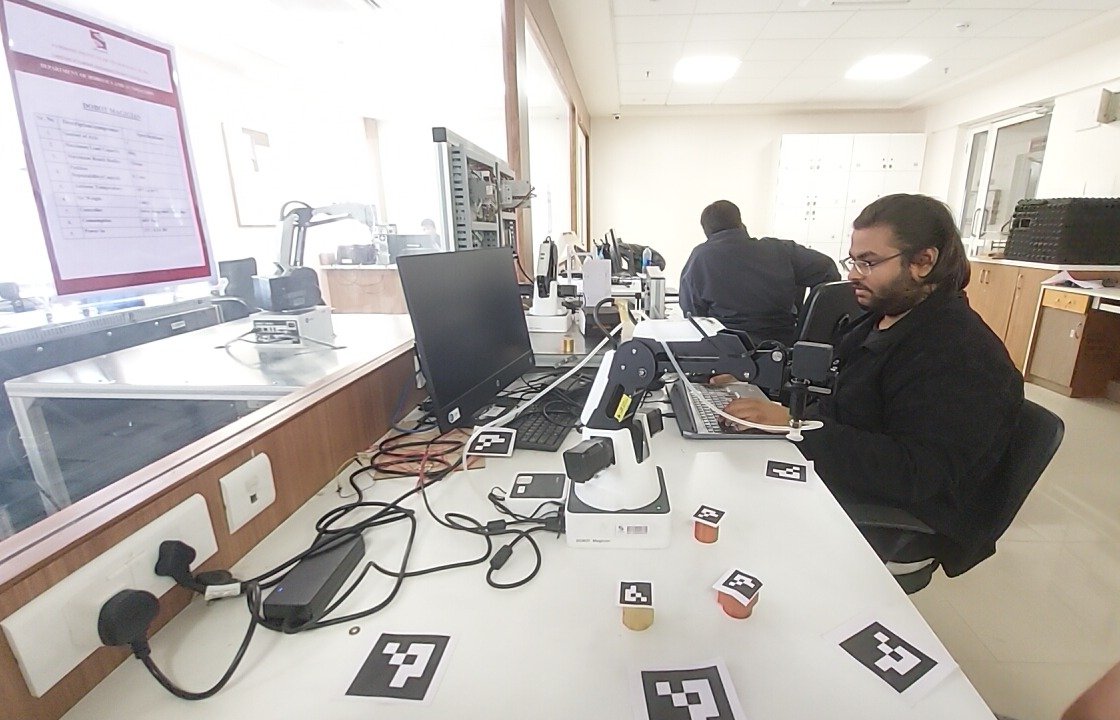
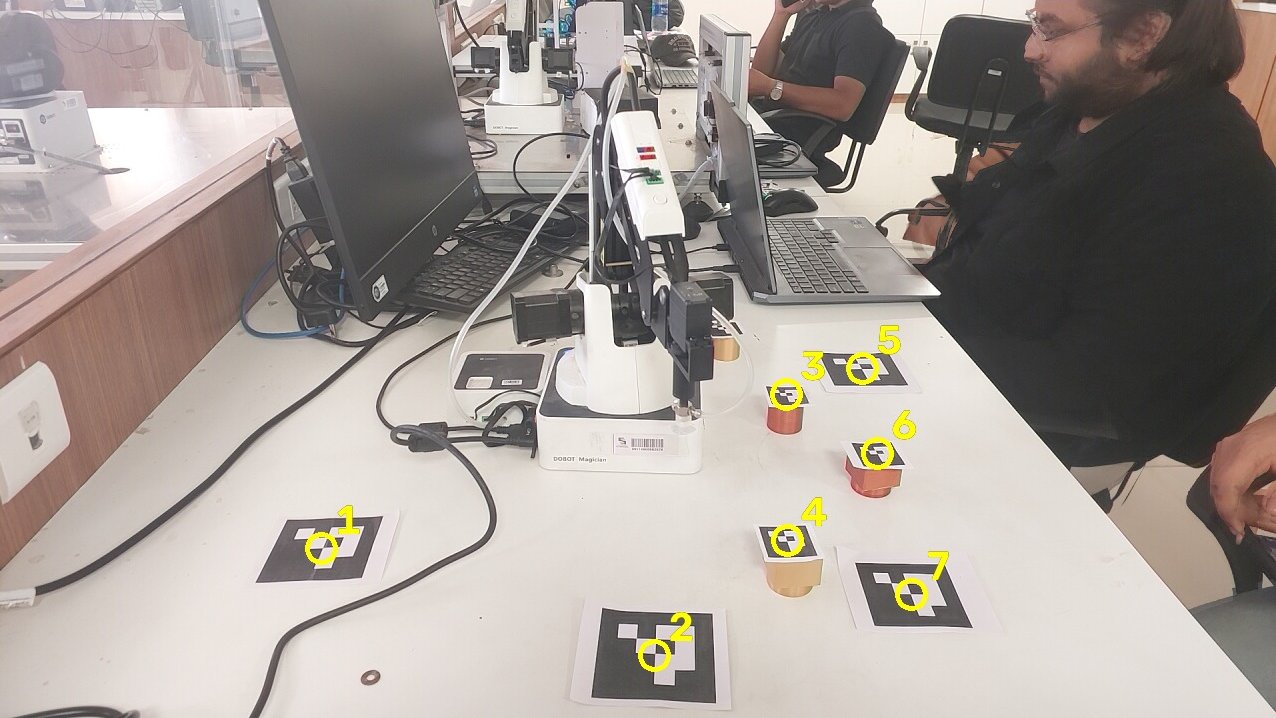
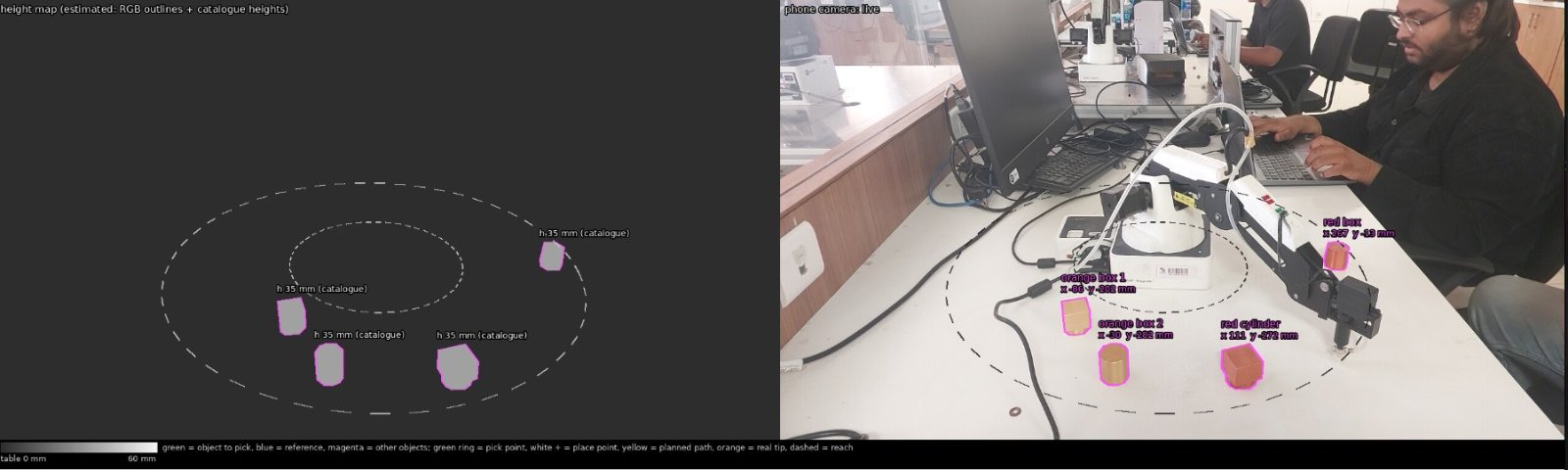
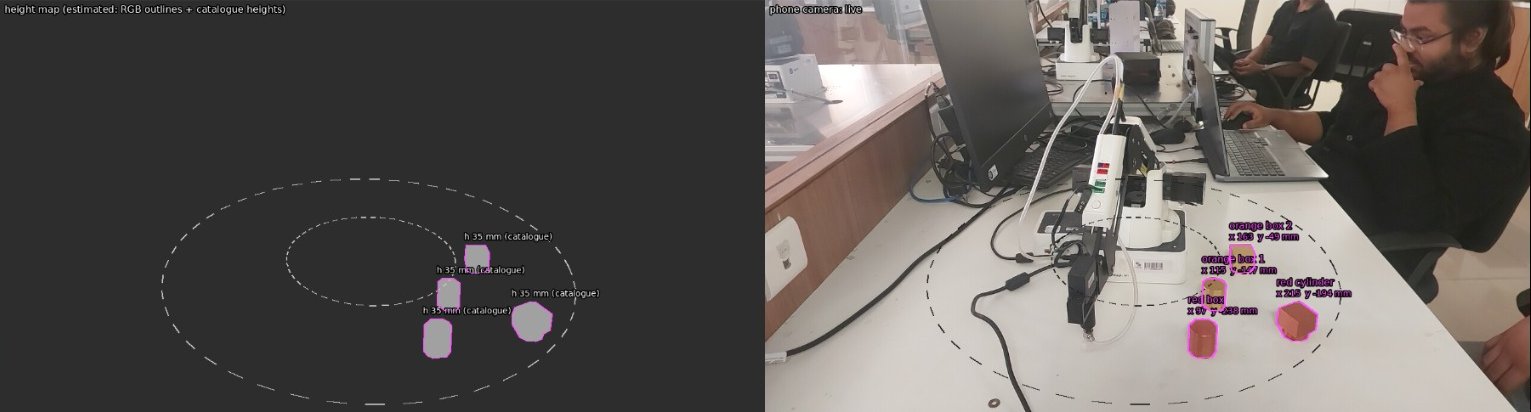
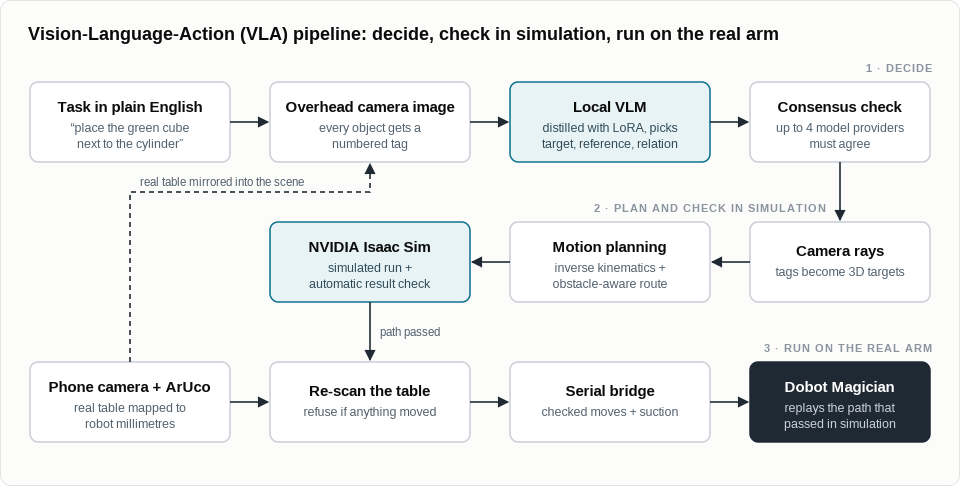
Type a task in plain English and a Dobot Magician carries it out. There is no training data and there are no hand-taught waypoints. A vision-language model reads the task against an overhead camera image, but it only picks from numbered tags on the objects: what to pick, what to place it next to, and what to avoid. It never guesses coordinates. Camera rays cast into the scene turn those choices into 3D targets. Inverse kinematics and an obstacle-aware route planner then produce a collision-free path, and an automatic check confirms the object ended up where the task asked. Every task runs in NVIDIA Isaac Sim first. On the real arm, an ordinary phone camera, calibrated with ArUco markers, mirrors the table into the simulation, and the Dobot only replays a path that passed in simulation.
On the real Dobot Magician